Slab Leak Detection in Chandler, AZ
A leak beneath a concrete slab can be difficult to see because the damaged pipe is below the finished floor. Early clues may appear as sound, moisture, temperature, flooring, or water-pressure changes rather than an obvious puddle. If several signs point to an under-slab leak, connect with a plumbing service professional for focused evaluation instead of guessing at the source.
Calls may connect you with an independent local provider.
Warning signs beneath the surface
Possible signs include a persistent sound of running water when fixtures are off, damp or unusually warm flooring, unexplained staining, flooring that begins to lift or change, a sudden pressure change, or water appearing at the edge of a wall or floor. A higher-than-expected water bill can also prompt investigation, but none of these clues proves that the leak is beneath the slab.
Sound and pressure clues
Listen during a quiet period with faucets, appliances, and toilets not running. Hissing, rushing, or intermittent water sounds may indicate movement through a pressurized line, although equipment and other plumbing conditions can create similar sounds. A noticeable pressure drop or a fixture that performs differently than usual is another reason to seek professional guidance.
Moisture and flooring clues
Damp carpet, discolored flooring, warm spots, cracked or lifting materials, and moisture along baseboards deserve attention. Moisture can travel away from the actual leak, so the most visible area may not be the source. Avoid assuming that a single wet spot identifies the pipe location.
What detection may involve
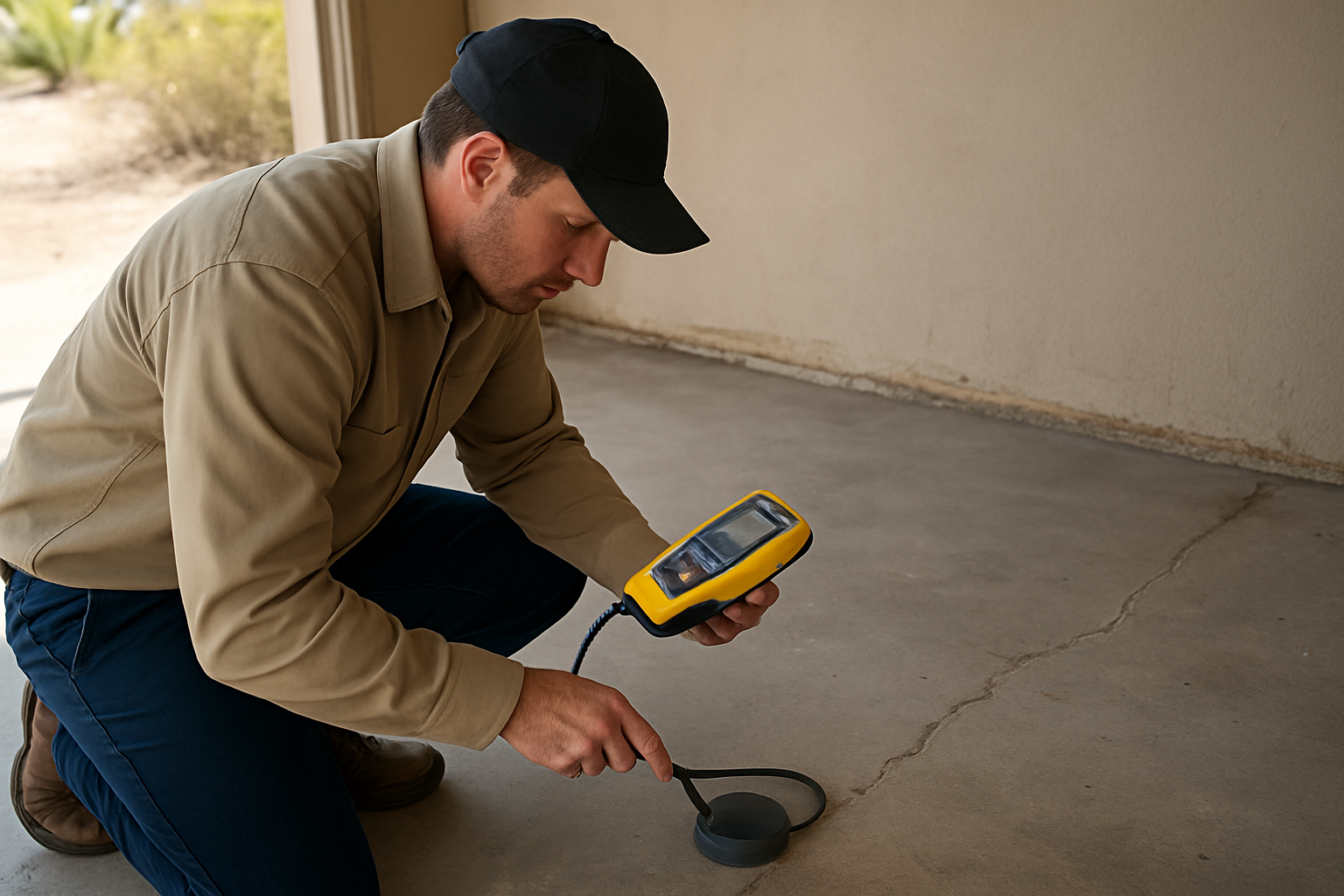
A professional evaluation may include reviewing the plumbing layout and symptoms, checking accessible fixtures and shutoff conditions, assessing pressure behavior, and using suitable listening or moisture-measuring equipment. The exact approach depends on the property and the suspected line. Detection may narrow the location, but it does not automatically mean the leak can be repaired without access.
Access and repair decisions
Once a likely area is identified, the next decision may involve how to reach the damaged pipe. Access could affect flooring, finished surfaces, or the concrete slab, depending on the location and repair plan. Ask what was found, how certain the location is, what access may be required, and what temporary steps can reduce further damage. Do not promise yourself a particular repair method before the condition is evaluated.
What to do while arranging evaluation
If water is actively escaping and it is safe to do so, shut off the nearest appropriate valve or the main water supply. Stop using fixtures connected to the suspected line, move vulnerable belongings away from damp areas, and avoid cutting into flooring or concrete. Keep clear of slippery surfaces and any area where water may contact electrical equipment.
Why early evaluation matters
A concealed leak can continue while the visible evidence remains limited. Prompt attention may help reduce ongoing moisture exposure and clarify whether the concern involves an under-slab line, another hidden leak, or a different plumbing problem. Early evaluation also gives you better information before damage spreads or access decisions become more complicated.
What's included
What to expect, start to finish
Record the early clues
Note sounds, warm or damp areas, flooring changes, pressure shifts, and when the symptoms occur.
Reduce active water safely
Limit fixture use and shut off an appropriate supply only when you can do so without entering an unsafe or electrically hazardous area.
Arrange focused detection
Connect with a plumbing service professional who can assess whether the evidence points to an under-slab leak or another hidden source.
Discuss access and next steps
Ask about the likely location, confidence in the findings, possible access implications, and ways to limit further damage while deciding on repair.
Slab Leak Detection FAQs
Still have questions? Call for the next step that fits your situation.
What are common signs of a slab leak?
Common clues may include unexplained running-water sounds, damp or warm flooring, staining, flooring changes, reduced water pressure, or water appearing near a floor or wall. These signs can have other causes, so a professional evaluation is needed to locate the source.
Can a slab leak cause flooring damage?
It can contribute to dampness, staining, lifting, cracking, or other flooring changes when water reaches finished surfaces. The visible damage may be away from the actual leak, so avoid treating the most obvious spot as a confirmed pipe location.
Should water be shut off if a slab leak is suspected?
If water is actively escaping and you can reach the correct valve safely, shutting off the appropriate supply may limit additional damage. Do not enter unsafe areas or handle electrical equipment in wet conditions. If you are unsure which valve controls the flow, seek professional guidance.
Can slab leak detection guarantee a repair location?
Detection methods can help narrow a suspected area, but conditions vary and no general page can guarantee a precise result or a particular access method. Ask the evaluating professional how the location was determined and what uncertainty remains.
Related information
Concerned about a leak beneath the floor?
Connect with a service professional in your area, describe the warning signs, and request focused slab leak detection before the problem becomes harder to locate.
Serving Chandler, Arizona
View the target city at a glance. This map shows geographic context only and does not represent a business address.